You can't decide on the job offer and the deadline is Friday
Five more days will not produce the information you are waiting for. Here are the three things that would, and how long each one actually takes.
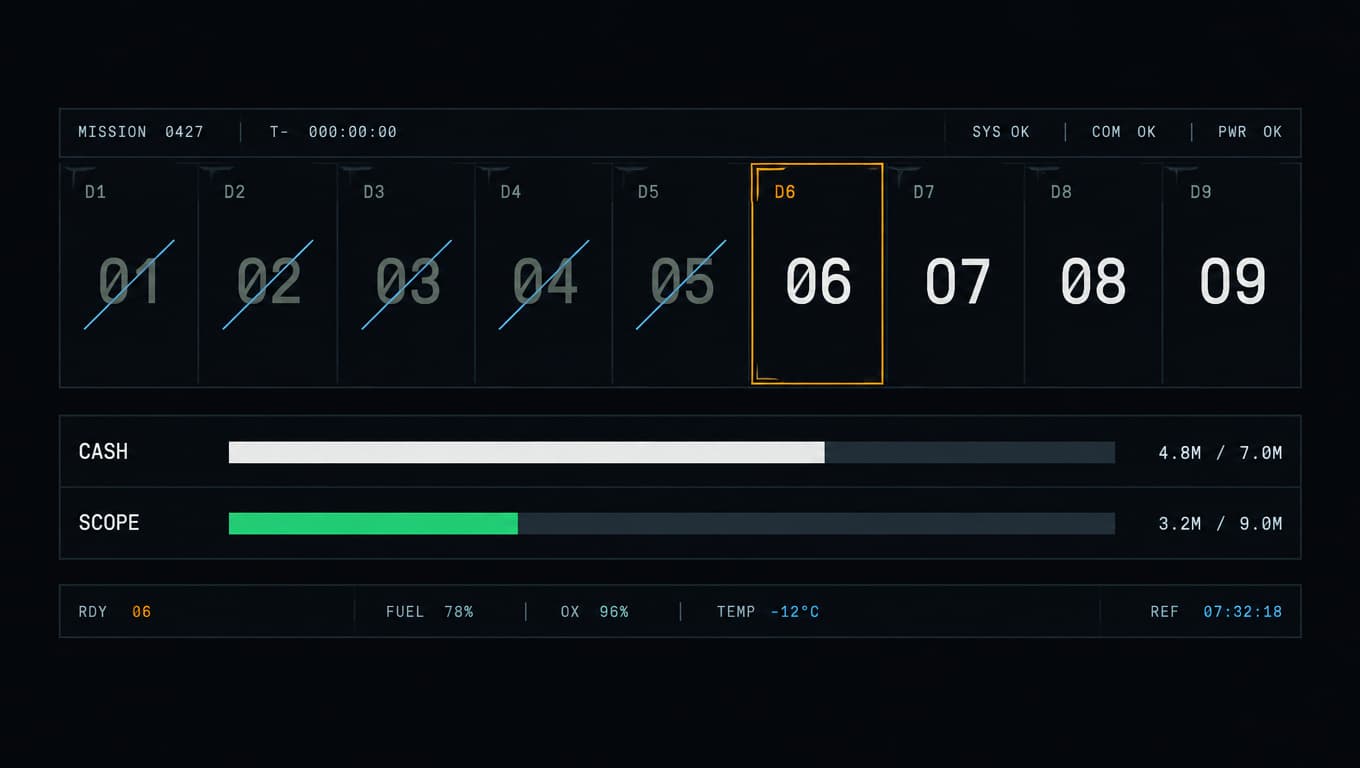
$ eldr --explain offer-window
You have read the offer letter eleven times. Nothing in it has changed since the second read. You are not gathering information anymore — you are using the document as a place to put the anxiety, the way some people reorganize a desk instead of starting the work.
That distinction is the whole piece. There is a version of the next five days where you acquire facts you do not currently have, and there is a version where you re-run the same comparison forty times and then answer the recruiter at 4:55pm on Friday with whatever you feel in that minute. Most people are in the second version and believe they are in the first, because both feel like diligence from the inside.
The claim, stated so you can prove it wrong
Here is the falsifiable version: no information you can obtain in the next five days will change a compensation-versus-scope decision. Not "probably won't" — won't. If that is true, then the deadline is not your problem and the extra days are worth nothing, and the only honest move is to decide on what you already know.
Test it directly. Write down the fact that would flip your answer. One sentence, specific enough that someone else could go get it. If you cannot write that sentence in ninety seconds, the claim holds for you and you are done deliberating, whether or not you have decided.
The three things that actually would change it
There are exactly three inputs I have seen move a real offer decision, and all three are obtainable inside a week if you start today rather than Thursday.
- A call with someone who left that team in the last year. Not a current employee — a leaver. Current employees describe the company they are being paid to describe. Leavers describe the one that existed. Two names, one afternoon, and it is the single highest-yield hour available to you.
- The scope claim in writing. "You'd own the roadmap" survives an interview and rarely survives an email. Ask for the reporting line, the headcount, and the budget authority in one message. The answer, including a non-answer, is data.
- A number you have never calculated: the cost of staying. Not the salary delta. The delta between where your current role puts you in three years and where the new one does, priced in the thing you actually want more of. Most people have never done this arithmetic and are therefore comparing one precise number to one vague feeling, which is a comparison the precise number wins every time regardless of truth.
Notice what is not on that list. More thinking. A pros-and-cons document, version four. Asking a fifth friend who does not work in your industry. Sleeping on it, again.
The case against this
The argument I have just made is convenient, and convenient arguments deserve a harder look than inconvenient ones.
Deadlines do get extended. A stated offer deadline is frequently soft, and asking once, with a reason and a date attached, often moves it by a week. Telling a man the clock is real when it is soft pushes him into the worst version of this decision: the one made under manufactured urgency, which is the same mechanism a timeshare presentation runs on.
That counter-case is strong and I am not going to pretend otherwise. There is a second one that is stronger. The offer you accept under clock pressure is disproportionately the one you leave inside a year, because clock pressure selects for relief rather than fit. Relief is a real feeling and it is not a reason.
So the honest position is narrower than the one I opened with. The five days are worth nothing if you spend them the way you spent the last four. They are worth a great deal if you spend them on the leaver call and the written scope. The deadline is not the enemy. The enemy is a week of rereading, which produces the same answer as no week at all and costs you the week.
What a read does with this
Feed it into the instrument and you get a position, a confidence number and a window — and the window will be shorter than the deadline, deliberately. If the offer closes Friday, a nine-day window is a fantasy and a three-day window is a forced move. The counter-case will usually be about the scope claim, because that is where the unverified assumption lives in almost every offer read we log.
You will not get a forecast. Nobody can tell you whether this job is good, including the people who work there, including you after a year of doing it. What you can have is a position you did not author, which is the only kind you are able to argue against, plus a record of what you knew on the day you chose so that in eighteen months you can tell the difference between a bad decision and a bad outcome.
The one rule worth keeping
Decide by Wednesday. Not because Wednesday is magic, but because a decision made two days before a deadline is made by you, and a decision made two hours before it is made by the deadline. The difference does not show up in the outcome. It shows up in what you learn, and what you learn is the only part of this you get to keep.
For entertainment and reflective purposes only. Not a substitute for professional financial, legal, medical or mental-health advice.