The business he did not start, twice
Worked example: two reads eleven months apart on the same decision, identical but for one input. The cost of waiting went from low to severe.
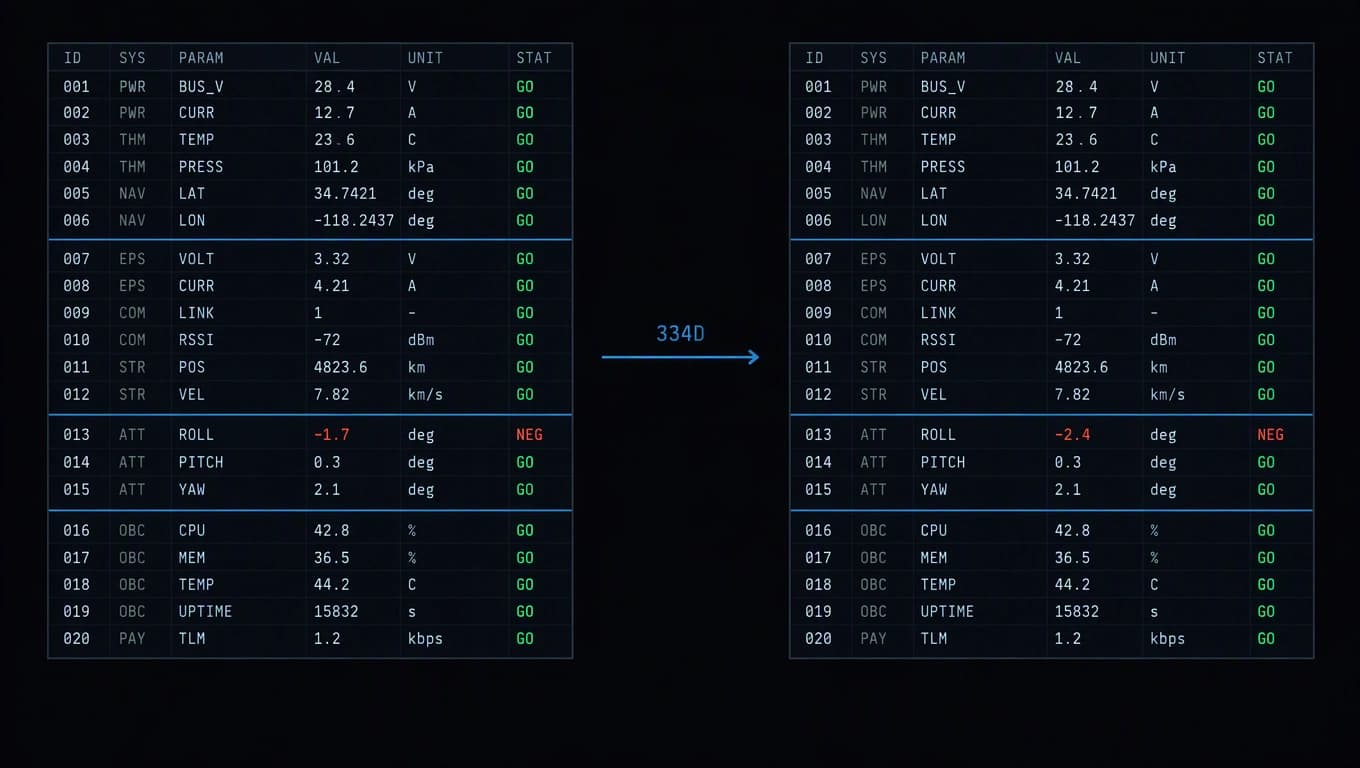
$ eldr --debrief 1WF6 --compare 0PD3
READ 1       0PD3      MOVE   5/10   window 45d   outcome waited
READ 2       1WF6      MOVE   7/10   window 21d   outcome acted
GAP          334 days
DELTA        wait-cost: low → severe
SOURCE       constructed file
This is a constructed worked example, not a customer. Nobody has run a read here yet: the product has not launched and the decision log is empty. The situation and the numbers are written to show how the instrument reads a file of this shape. Real debriefs replace it when there are any.
The same man, the same decision, eleven months apart. This is the most instructive pair I can put in front of you, because almost nothing changed except one input, and that one input is the one men report worst.
The decision, both times
Leave a salaried engineering job to build a maintenance-scheduling product for the trade firms he had spent nine years selling into. Two named customers who had said they would pay. Eleven months of savings.
Word for word, the decision sentence in the second intake was 94% identical to the first. He had not rewritten it. He had been carrying it.
What was the same
- The two named customers. Still two. Still verbal.
- The savings. Marginally higher, in real terms slightly lower.
- His stated lean: about 70% toward going, both times.
- His decision style: evidence-led, strikes under pressure, decides alone. Same code.
What was different
One input. In read 1 he priced the cost of waiting as low — "the opportunity is not going anywhere, these firms do not adopt fast". In read 2 he priced it as severe, and in the free-text field he wrote that one of the two named customers had bought something else in February.
That is the entire delta, and it moved confidence from 5 to 7 and the window from 45 days to 21.
Read 1, and why it did not work
MOVE at 5/10 is a position nobody acts on, which is a design problem more than a user problem. A 45-day window on a decision with no external deadline gave him a month and a half of permission to keep preparing, and he used it exactly that way: more market research, a second version of the financial model, no customer conversations.
The counter-case from read 1, verbatim:
You rate the cost of waiting as low. That assessment is the load-bearing beam of this entire file and you have no evidence for it. You have two verbal customers and no signed anything. Ask both of them what happens if you show up in a year instead of a month, and put their answers in the next intake. If you cannot bring yourself to ask, the cost of waiting is not low — it is a number you would rather not know.
He did not ask. He logged the outcome as "waited" at day 51 and rated satisfaction 2/5.
Read 2
MOVE at 7/10, window 21 days. He acts on day 17: notice given, one customer signs at a lower monthly figure than the original conversation, the other is gone. Outcome logged at 4 out of 5. The counter-case in the first read had told him exactly what to do eleven months earlier and he had not done it.
That reading is only half right, and the half it lets off is ours. Read 1 returned a position that was unactionable by construction, with a window long enough to hide in.
What this file establishes
The cost of waiting is the input that decides most cases, and it is the input men guess at. In read 1 the guess was wrong by a margin that cost him one of his two customers and eleven months. Nothing else in fourteen inputs moved enough to matter.
The transferable instruction is not "be braver". It is narrower and it is checkable: the cost of waiting is not a feeling you introspect, it is a question you ask the other parties. Two phone calls in March 2025 would have produced read 2 eleven months early.
What changed in the read because of this file
Two things, and both are visible in the current intake. The question about the cost of waiting no longer accepts a single adjective — it asks what specifically decays, and who else would have to still be available in ninety days for the plan to survive. And a repeated decision now surfaces the previous read's counter-case at the top of the new one, rather than filing it in an account page nobody opens. If read 2 had arrived with read 1's counter-case printed above it, the 334-day gap would have been harder to sit inside.
Neither change would have made him act in March. That is worth saying because a product log that credits itself with every improvement is advertising. What they do is make the specific evasion in this file — pricing a decay you have declined to measure — cost one extra deliberate keystroke, and a surprising amount of avoidance does not survive one extra deliberate keystroke.
What it does not establish
That going was right. He is fourteen months in with one customer at a reduced figure and his own note says the first year is harder than the model said. A man who read this debrief as encouragement to quit would be misreading it. The claim is about the input, not about the outcome — and the reason we can make a claim about the input at all is that the same file was run twice, which is the only form of evidence this log can honestly produce.
For entertainment and reflective purposes only. Not a substitute for professional financial, legal, medical or mental-health advice.
Stuck on a decision like this?
Talk it through in ELDR Chat. It argues both sides and gives you a straight answer and your next move. Two questions free, no sign-up.