He acted, and rated it 1/5
Worked example: MOVE at 8/10, executed inside the window, outcome bad anyway. The case every confident read should be checked against.
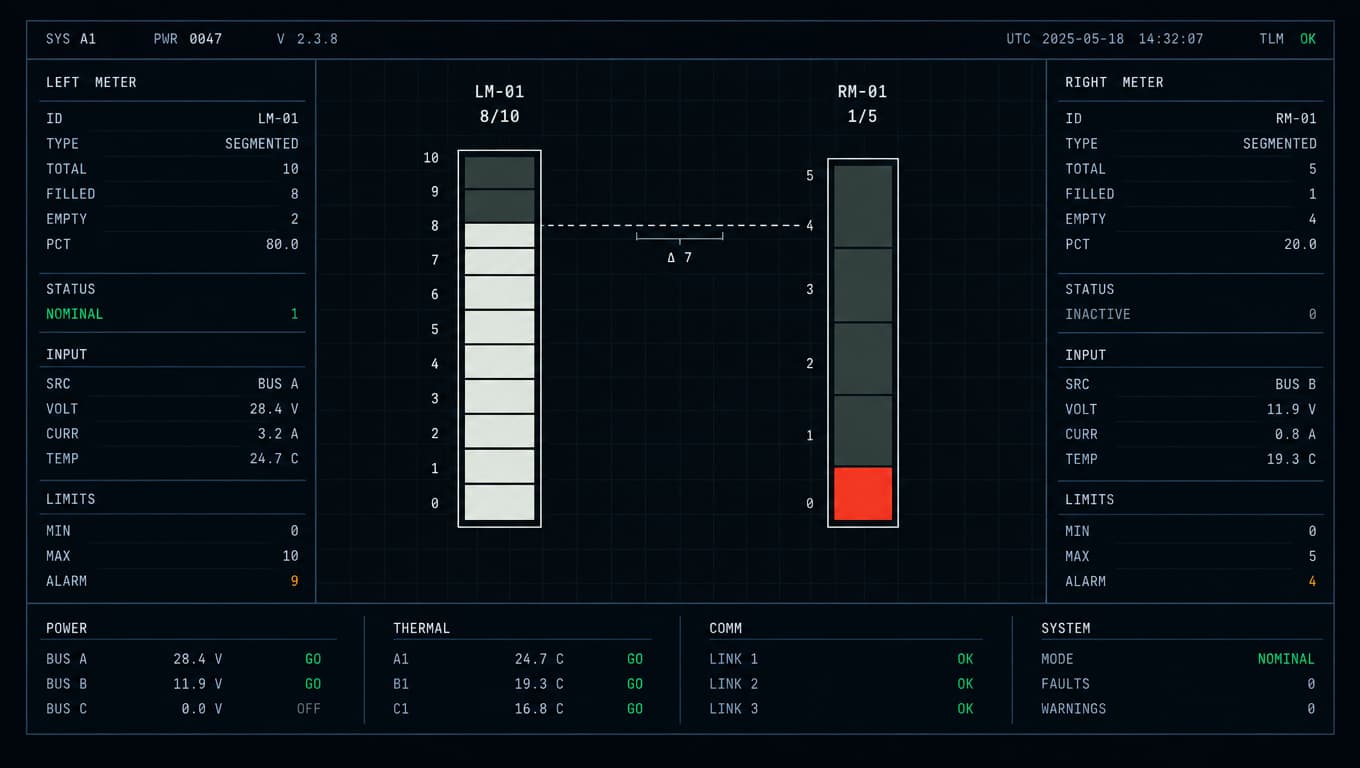
$ eldr --debrief 9LM2
POSITION     MOVE
CONFIDENCE   8/10
WINDOW       14d
OUTCOME      acted, day 9
LOGGED       day 40
SATISFACTION 1/5
SOURCE       constructed file
This is a constructed worked example, not a customer. Nobody has run a read here yet: the product has not launched and the decision log is empty. The situation and the numbers are written to show how the instrument reads a file of this shape. Real debriefs replace it when there are any.
A high-confidence read, executed promptly, inside the window, exactly as designed. Forty days later the outcome is logged at 1 out of 5. The instrument worked as described and the decision still went badly.
Every product like this one has files like this and most of them do not publish them. This one is the most useful page in the library, because it is where the limits are visible.
The decision
Take over a failing team at his own company rather than accept an external offer. Both options were live, the internal move was a promotion on paper, and he had been circling for four months.
Why confidence was 8
The inputs were unusually clean. A real external deadline. A documented scope. A stated lean that matched his described behavior — he had already been informally doing half the job. No contradictions between conviction and drag. On the internal audit that the confidence number actually performs, this file scored high and the number was not wrong about what it measures.
That is the distinction this debrief exists to make. The confidence number measures the consistency of the file, not the quality of the outcome. It was right about the file. The file was silent about the thing that went wrong.
What went wrong
The two people whose competence made the team salvageable resigned within five weeks, for reasons that had nothing to do with him and were not knowable in March. Without them the job is a two-year turnaround with no mandate, and the external offer is gone.
Nothing in fourteen inputs could have caught that. Nothing in fourteen hundred inputs could have caught that. It is the class of event that makes forecasting a decision like this dishonest, and it is the reason this product issues zero forecasts and says so on the pricing page.
The counter-case, verbatim
The turnaround case rests on two engineers you have named and cannot retain. You have no mechanism to hold them and no budget to try. Ask what this role is if either one leaves in the first quarter — if the answer is "not a job I would take", then you are accepting a position whose viability is controlled by two people who have not agreed to anything.
Read it again. It named the exact failure, in advance, in the read he acted on.
He read it and priced the risk at something like 15%, which is a completely reasonable estimate that happened to land on the wrong side of the coin. This is what it looks like when a counter-case is correct and the decision was still defensible.
The claim
A bad outcome is not evidence of a bad decision, and the only way to tell them apart is a record written before you knew. That is the entire argument for logging a read. Not accountability theater — evidence about your own process that has not been retroactively edited by the result.
Without the log, this man remembers March as the month he ignored a warning and made a stupid move. With the log, he can see that he weighed the named risk, put a number on it, and lost. Those are different men to be, and only one of them is able to make a confident decision again in the fall.
The case against publishing this
Presenting an 8/10 read that ended at 1/5 as a virtue is a rhetorical move, not an honest one: it inoculates the product against every future failure by defining outcomes as out of scope. If the instrument can never be wrong because it never predicted anything, then what exactly is being sold?
Fair, and the answer has to be concrete or the objection wins. What is being sold is a closed loop: a position you did not author, the strongest argument against it, a window short enough to act inside, and a record. Those are checkable claims. Whether the position was correct is not a claim this product makes, and the day it starts making that claim you should stop paying for it.
What would falsify the product is different and harder: if men using it did not close decisions faster than they otherwise would. That is measurable, it is the thing the coin study measured at scale, and it is the only scoreboard here that means anything.
What he did in the fall
He took an external role in October, at a smaller company, with a scope he verified through two people who had left before accepting — which is a change in method directly traceable to this file. The difference on the second read is one sentence long: the risk was checked with a person instead of estimated.
That is the only thing a 1/5 outcome is good for, and it is not a small thing. A man who remembers March as a humiliation learns nothing from it, because humiliation generalizes to "do not decide" rather than to "verify this class of assumption". A man with a written record of having weighed a named risk at 15% learns something narrow and usable: that his 15% was a guess, that guesses about other people's intentions are the weakest inputs he produces, and that two phone calls convert a guess into a fact.
Nothing in the read told him that. The log did, six months later, which is the actual product and the reason the outcome field exists at all.
Stuck on a decision like this?
Talk it through in ELDR Chat. It argues both sides and gives you a straight answer and your next move. Two questions free, no sign-up.