Claim
Whoever invited, pays
The default is clean and it prevents almost all of the standard awkwardness: if you proposed the meal, chose the place, or are asking for something, the bill is yours.
That means deciding before you invite whether you can afford the restaurant you are suggesting, which is the actual discipline here. If you cannot, suggest somewhere you can. Proposing an expensive place and then splitting is a small trap you set for your guest, because they cannot object without embarrassing themselves and they may not be able to afford it either.
Action
Settle the method before the food arrives
With friends, say it at the start in one sentence. Shall we just split it evenly, or separate cards? Both are fine. Deciding at the start is what stops the ten minute arithmetic session at the end with a waiter standing there.
One exception worth naming out loud: if you order a steak and two whiskies while someone has soup and water, do not split evenly. Say so yourself before anyone has to. Working out the fair share is your job, not the job of the person who ordered the cheapest thing on the menu.
Evidence
Tipping is local law and local wage structure
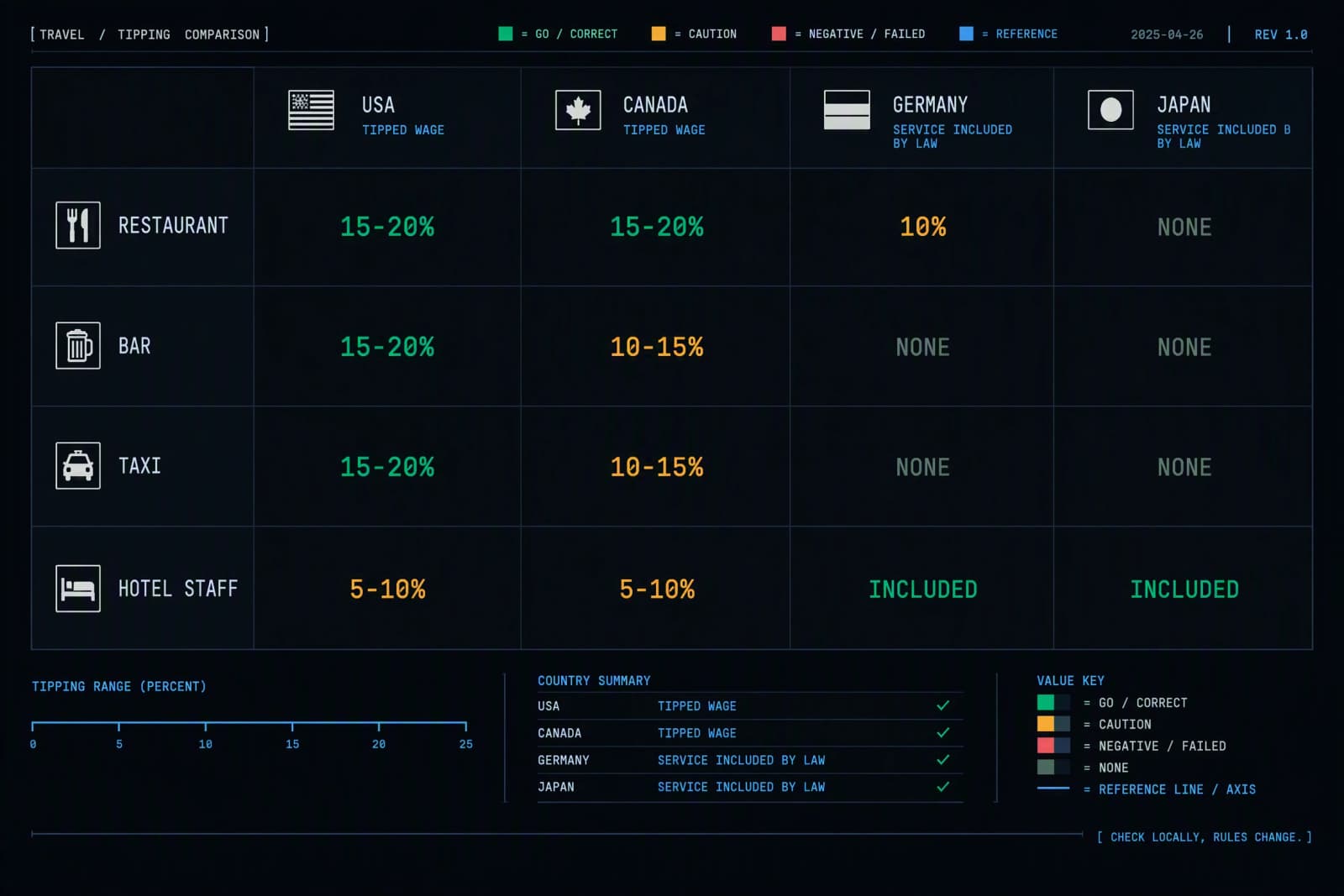
Tipping norms are not politeness preferences, they follow how staff are paid. In the United States, federal law permits a lower cash minimum wage for tipped workers, so a tip in the range of 18 to 20% is functionally part of the wage. In France, service is included by law and the printed total is the total, with small change left as a genuine extra. In Japan, tipping is generally not practiced and can create confusion.
So the correct behavior differs by country and sometimes by city, and the only reliable move is to look it up before you travel rather than exporting your own habit.
Claim
Gifts are about the recipient, and the receipt is private
A good gift demonstrates that you paid attention. A bad one demonstrates a budget. Those are different signals and the second one is uncomfortable to receive, because it turns the exchange into an accounting problem.
Practical rules. Never let the price be visible or inferable. If you are a guest in someone's home, bring something consumable rather than something they must display: wine if they drink, coffee, something for the table. And when you receive a gift, the only correct response is to be pleased on the spot, whatever you think of it.
Example
Two colleagues took the same client to lunch in different months. The first picked a restaurant he liked, ordered a bottle, and split the bill with the client at the end because that seemed modern and equal.
The second asked the client to pick somewhere near his office, ordered the same thing the client ordered, and paid without the bill appearing on the table, having given his card to the staff on the way in. He was not being smoother. He had removed three separate moments where the client would have had to make a decision about money in front of a supplier, and the client noticed the absence of them without being able to say why.
Caution
Paying as a status move
There is a way of paying that puts the other person in debt, and it is easy to do accidentally: insisting loudly, waving the bill away in front of the table, mentioning the cost later even once.
The repair is to make it boring. Pay quietly, ideally before the bill reaches the table. Say nothing about it afterwards, ever. And if someone wants to pay you back, let them, because refusing repayment can be its own way of keeping them indebted. The generous version of paying leaves no obligation behind, which means it also leaves no credit for you.
Aside
When you cannot afford the room
Most etiquette writing quietly assumes you can pay. If you are the junior man in a group that eats in places you cannot afford, the advice to always pay your share is a recipe for debt, and men do run up card balances to avoid one uncomfortable sentence.
The uncomfortable sentence is cheaper. That is out of my range this month, can we do something else, or I will come for a drink after. Said once, plainly, without apology or explanation, it is over in four seconds and nobody thinks about it again. What people do notice, eventually, is the man who stops showing up and never says why.