Claim
Nobody else is keeping your record
Your manager remembers the last eight weeks and the two things that went wrong. That is not malice, it is the ordinary capacity of a person with eleven reports and their own job to do.
So the record is your responsibility, and it has to be written as it happens. A promotion case built from memory in the week it is due contains three vague claims and a feeling. A case built from a file contains dated items with numbers and names, which is a completely different document to argue against.
Action
Open the file and put three things in it
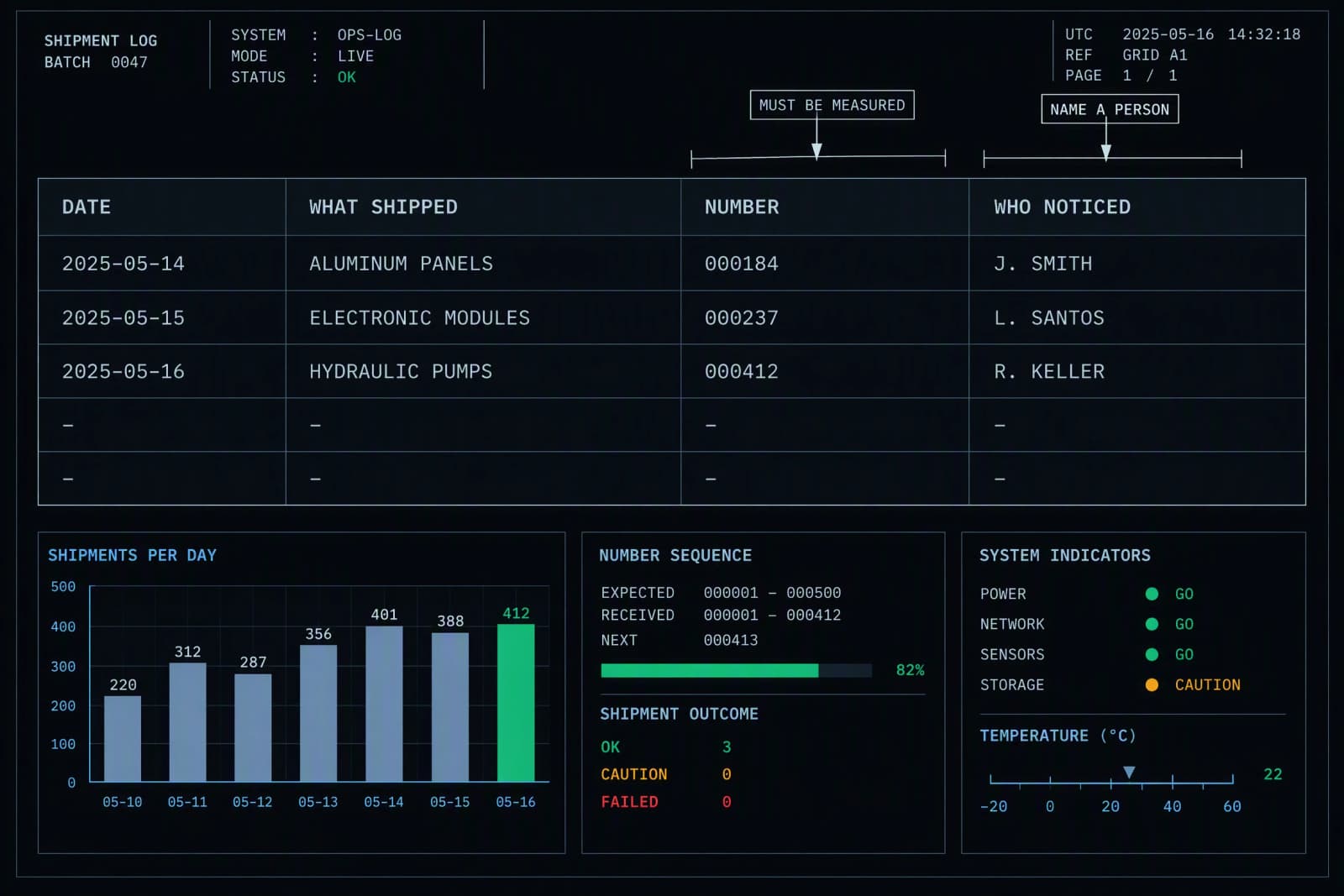
One document, anywhere you will actually open it. Four columns: the date, what you shipped or fixed, the measured effect, and who noticed.
Fill three rows now from the last two months. If you cannot find a measured effect, write the closest number you have access to, even if it is rough: hours saved per week, tickets closed, error rate before and after, revenue touched. A rough number you can source beats a precise one you invented, and it also tells you which parts of your work the company does not measure at all, which is useful information about where you are visible.
Then add a calendar reminder for the last Friday of every month, fifteen minutes, to add whatever happened. The whole system is that reminder. Without it you will remember to keep the file for three weeks and then find it empty next March, which is what happened the last time you tried this.
Evidence
Why a number beats an adjective
A claim with a quantity attached invites a different conversation. Compare improved the onboarding process with cut new client setup from nine days to four, measured across eleven clients in the second quarter.
The mechanism is where the cost of doubt sits. An adjective costs you nothing to write, so the reader has to carry the risk of believing it. A specific, checkable number moves that risk onto you, because you would be exposed if it were wrong, and the reader knows that. This is the same reason a named source beats research shows, and it is why the second version persuades without sounding like persuasion. You do not need statistical rigour. You need a number that is real, taken from something the company already measures, and quoted with its period.
Claim
Record the witness as well as the work
The fourth column matters more than men expect. Decisions about you get made in rooms you are not in, and in those rooms someone has to say your name.
So write down who saw each thing: the finance director who mentioned the saving, the client who wrote the email, the colleague whose week you rescued. When a promotion round comes, those are the people your manager can quote, and one sentence from a named person outside your team is worth more than a paragraph of your own prose.
Example
Yusuf kept the file for a year and used it exactly once, in a twenty minute conversation in March, when a reorganization put two teams under one director and he had to explain what he did.
He pasted six dated rows into an email. Two had finance numbers attached, one had a quote from an operations manager in another country. The director later told him it was the only thing anyone sent him that he could take to his own boss without doing extra work first. Yusuf kept his team and got the larger scope. He estimates the file cost him about three hours across that whole year.
Caution
A file is not a case for self promotion at all times
Men who discover this sometimes start narrating their achievements in every meeting, which reads as insecurity and irritates the people whose support they need.
The file is ammunition held in reserve. It gets used in a review, a promotion round, an interview, a reorganization, or when someone senior asks what you have been doing. Between those moments, say nothing. The reason to keep it is precisely so that you do not have to perform in the meantime.
Aside
When the measured number is the wrong number
Recording what is measurable pushes you toward work that produces numbers, and the most valuable thing you do may not produce any. Mentoring a junior properly, preventing a bad decision, killing a doomed project early: none of these generate a metric, and the prevented disaster is invisible by definition.
Write those down anyway, in the same file, described as specifically as possible with the person who witnessed it. And notice if your own behavior starts bending toward the measurable. That drift is a known failure of every measurement system ever built, including this one.